RSS
Greetings! Have you ever wondered if a movie's worth blowing the money on to see at the theater or what to add next to your NetFlix queue? Then you've come to the right place! Enjoy!
Showing posts with label art. Show all posts

"Made You Look: A True Story About Fake Art" Review


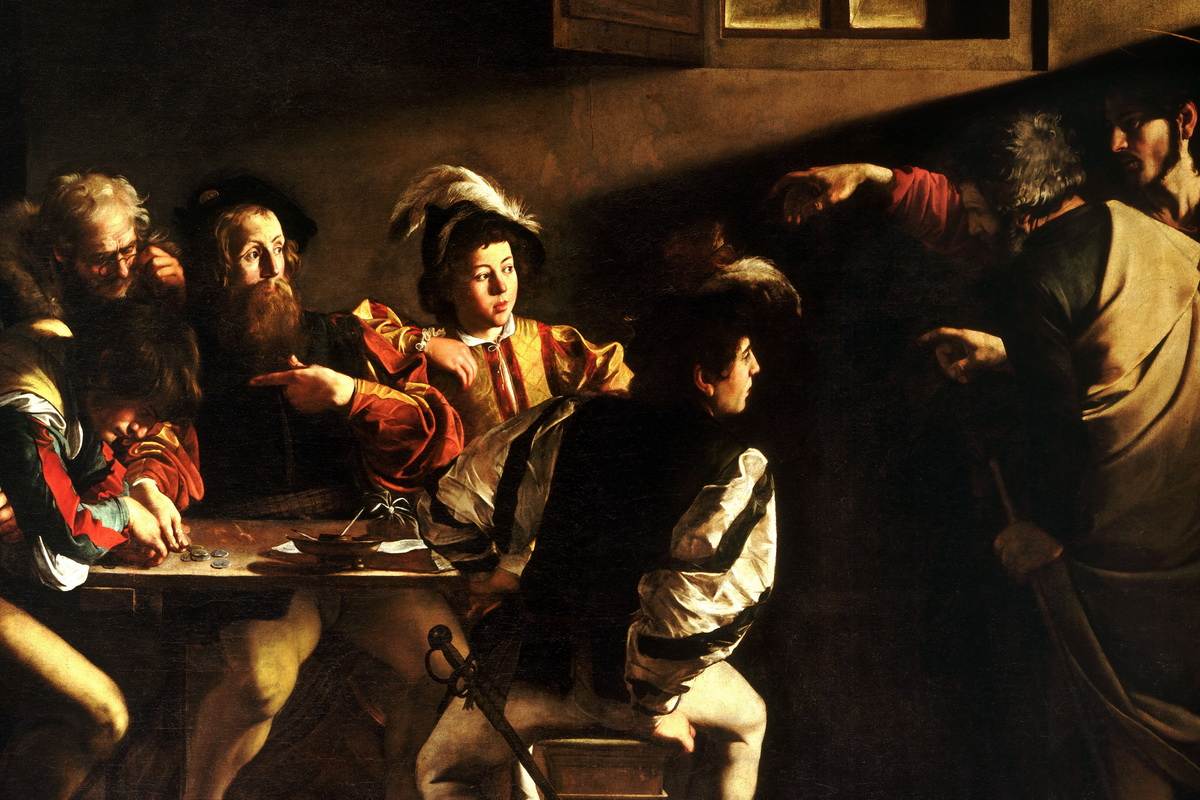
To paraphrase the Blur album title, modern art is rubbish. Post-modernism's war against truth and beauty has led to mountains of junk called "art" by elitist snobs where more effort goes into the titling and description card that hangs next to this claptrap explaining why some mess that could have been made by a brain-damaged wallaby on a meth jag represents abuse or systemic racism or the evils of late-stage capitalism. It's a scam and ugly. Go to a museum and look at works painted prior to the 20th Century when skill and technique were required and compare to current nonsense.

In fact, let me help you. This is Caravaggio's "The Calling of Saint Matthew":
And this is Robert Motherwell's "Elegy to the Spanish Republic No. 70":

QED

Now that we've established that I have a rightfully low opinion of modern art, let's talk about Made You Look: A True Story About Fake Art, a fast-paced documentary about how a bunch of super-wealthy elites paid millions for forged Abstract Expressionist (AbEx to the art snobs) paintings supposedly from Jackson "Expensive Drop Cloths My Specialty" Pollock and Mark "Rectangles Are Me" Rothko among other creators of sloppy claptrap that snooty doofuses chin-stroke over the energy of all that oily-black paint splattered all over a canvas. (Something about fools and money applies here.)

The tale starts in 1995 at New York City's oldest art shop, the Knoedler Gallery, which was in operation well prior to the Civil War, and the arrival of a woman named Glafir Rosales who claimed to represent an anonymous Mexican art collector who had come to America in the 1950s and bought tons of AbEx pieces on the cheap from the artists, but was looking to sell them. Starting with a Rothko (the rectangles guy) bought by the gallery's director, Ann Freedman, for the fire sale price of $750,000, eventually auctioning for $5.5 million. 

While the painting and the dozens more Rosales brought in over the next decade lacked the usual provenances, they were examined by numerous experts who deemed them authentic works of their respective artists. Eventually suspicions over the sheer quantity of supposedly unknown works - some of these artists like Pollock were extensively documented at work, yet none of these painting showed up lurking in the backgrounds of their studios - led to closer examination of the paintings and their eventual exposure which led to Freedman's resignation in disgrace ahead of the gallery's closing in 2011.

Beyond the absurd amounts of money for ugly paintings, the central question is how could such a scandal have occurred. Why didn't Freedman realize that how unlikely it is for so many paintings to come out of nowhere? One, two, even a dozen, perhaps; but over 60 works which sold for over $70M passed through her hands with her buying wildly below their auction value and flipping at great profit. As one talking head says, “Either she was complicit in it, or she was one of the stupidest people to have worked at an art gallery.” While it may seem judgemental, it's a question begging asking. Eventually one well-heeled victim sued and it went to trial forcing those who had authenticated the forgeries to explain how they'd blown it. The doc also hints that the trafficking was known to the gallery's owner, Michael Hammer (father of actor and cannibal wannabe Armie), who used the proceeds to keep the gallery solvent.

 As for where Rosales and her Spanish grifter boyfriend who used her as the face of the scam got the paintings, the answer is a Chinese national math professor who lived modestly in Queens. He'd come to America to pursue an art career, but when that didn't work out, he took to making fakes for his own amusement. In China, art reproduction is considered legit work and we're shown operations cranking out duplicates. When the scandal broke, he fled back to China (where he wouldn't be extradited), and refused to participate in the doc. While he's probably the least culpable in this fraud, it would've been nice to hear his story.

 Made You Look is of a piece with previous art docs like Who the #$&% is Jackson Pollock? (about a lower-class woman who found a Pollock painting in a thrift store, but the snooty art world refused to accept it) and My Kid Could Paint That (4-year-old girl becomes art world phenom until it's learned her father is the actual painter) - both of which my DVD reviews have disappeared online, darn it - where the hype and sophistry surrounding modern "art" makes one question whether the art itself is the point or it's just a elite intellectual class thing?

Score: 7/10. Catch it on Netflix.

"Banksy Does New York" Review


In October 2013, notorious and anonymous British street artist Banksy did a month-long "residency" in New York City, creating a unique piece of art every day, leaving cryptic hints as to its location and providing audio commentaries for select pieces (which sound like an American performed them). The excitement surrounding this event is captured in Banksy Does New York which is available on HBO GO/NOW. (Also on YouTune, see below.)

This immediate prompted a mad rush for "Banksy hunters" to rush and locate and photograph the works before they were destroyed (some businesses painted them over), defaced (jealous graffiti artists tag over them), or sometimes cut out and hauled away. Enterprising street hustlers covered one piece with cardboard and charged spectators for them to remove it so they could see and photograph it.

One day's stunt was hiring an old man to sell small signed original spray pieces (spraypainted onto canvases with stencils) from a booth in Central Park for $60, only revealing what he'd done the next day. There was no sign indicating what they were, though anyone familiar with Banksy would've recognized his style. The film documents some of the purchasers ranging from a woman who bought a couple for her children, but only after haggling a 50% discount, to a man who bought four to hang in his new Chicago home which needed something for the walls. The total sales for the day were $420 and each piece was worth an estimated $250,000 on the market!

Another bit of stunning generosity came in the form of a painting that had been bought from a charity shop which funded homes for HIV+ people for $50. Banksy added additional elements, signed it, and had it slipped back into the shop a couple weeks later upon which he announced it was hanging there. It was immediately put up for auction and raised over $600,000 for the charity.

Some pieces were whimsical, some surprisingly dark and political, some as simple as a quit spray on a wall while others involved massive installations which somehow got put up without anyone noticing until its unveiling. ( One day's art was "cancelled due to police activity.") All of this is documented by social media videos, Twitter posts commenting on it, and post-event interviews with art critics and writers and Banksy fans. (One pair which keeps popping up is this weird and annoying couple who look like the real-life version of the rom-com trope about high school losers who agree to marry each other if they can't meet anyone in 10 years.)

There is also some discussion about the tension between the "graffiti is art/graffiti is vandalism" sides and the high dollar world of art galleries who have removed Banksy's works and sold them for many monies. One dealer, who looks like a stereotypical art culture vulture who fancies himself a Bond villain, is shown examining a large cinder block Sphinx which a trio of Latino garage workers hauled away and stashed in their grandmother's garage. They'd turned down a $50,000 offer when they took it and agree to have Mr. Art Guy handle its sale. (As far as I can see, it still hasn't sold, so they're not rich.)

I find a lot of what's called "art" these days to be post-modernist garbage with no technique or skill required other than writing a brief Leftist political manifesto on the placard. It used to require years of training and practice in disciplines like drawing, painting, light, color, etc. Now it's low-effort nonsense with no purpose but to shock the squares.

But I like Banksy because, unlike Andy Warhol who ended up making himself the brand with his signature look and mien, his work is usually instantly identifiable (which is probably why the Sphinx hasn't sold; it looks too different) and he seems to have a perspective on what he's doing and what it means. That he does it from the shadows forces the focus on the art and as Banksy Does New York shows, it's how people react to his art that becomes part of the experience itself.

Briskly-paced - cramming 30 pieces into a less than 80 minutes necessitates that - and fascinating, Banksy Does New York is a must-watch for his fans and it's also a good introduction for those unfamiliar with his style and method.

Score: 8.5/10. Watch it on HBO.


If you don't have HBO (or someone's password), here it is in SD.

"Blurred Lines: Inside The Art World"


Most modern art is rubbish. Ever since post-modernism replaced the need for talent with a need to bamboozle, "art" is whatever a bunch of herd animals have been told it is by their grifter masters and does the saying about fools and their money ever apply here.

While the trailer (below) implies that Blurred Lines: Inside The Art World rips the lid off the uber-high dollar market with interviews with the biggest players on the artist, gallery, auction house and journalistic sides of the symbiotic scene, the end result is as superficial as the subject matter because no way are any of these people going to blow up the scam that has made them rich or influential in the first place.

When you see the paranoia about how much art is "worth" which overhangs the decisions underlying what works and how many artists create, what galleries and dealers showcase them, what they initially sell for, whether art fairs are good or bad because they allow the rabble to see things usually reserved for the oligarchs, etc. it makes the few ponderings whether all this money is a good thing for art as "ART" seem a passing concern since there's hella chedda to be made, yo.

Me, I'll stick to buying pieces from local artists that I find appeal to what I want on my wall; not what will impress shallow art snogs or what may be a good investment.

Score: 4/10. Skip it.

 
DirkFlix. Copyright 2010-2015 Dirk Omnimedia Inc. All rights reserved.
Free WordPress Themes Presented by EZwpthemes.
Bloggerized by Miss Dothy