RSS
Greetings! Have you ever wondered if a movie's worth blowing the money on to see at the theater or what to add next to your NetFlix queue? Then you've come to the right place! Enjoy!

"Nomadland" Review


 With the announcement of the 2021 Oscar nominations this week, thus begins the annual slog to see as many of the nominated films and performances as possible. Having already seen only the appallingly-nominated Sound of Metal so far, I decided to begin with one of the top favorites, Nomadland, which received nominations for Best Picture, Director, Actress, Adapted Screenplay, Editing, and Cinematography, four(!) of those nominations going to director-writer-editor Chole Zhao, whose next film will be the year-delayed Marvel Eternals slated for release in Nov. 2021.

 Starring Oscar-nominated Frances McDormand, Nomadland, tells the story of Fern, a widow from Empire, Nevada, a gypsum mining company town that shut down and became a ghost town in 2011. When the company-owned home she and her husband shared was taken from her (as it was for all employees), she stored her possession and moved into a van. We meet her as she parks in RV camp and begins doing seasonal work at an Amazon fulfillment center. (This is a real thing, part of what Amazon calls CamperForce at several of their sites nationwide for the past decade.)

When the work ends after the New Year, she is invited by co-worker and RVer Linda May (nearly all roles are played by real-life nomads as fictionalized versions of themselves) to come to a camp in Arizona where nomad lifestyle guru Bob Wells will be speaking and teaching the ways of the open road. Fern initially demurs, but after one too many cold nights in the van, decides to head south.

 While there, she makes the acquaintance of David (David Straithairn, who by being a recognizable face amongst the civilians telegraphs his importance), who is sweet on her, and Swankie ("herself") as a veteran nomad who thinks Fern needs to learn up on self-sufficiency. Swankie reveals she has terminal cancer and is planning on heading to Alaska to kayak and experience as many good moments as she can before dying.

From there the film follows Fern as she drifts from one area to another, picking up work as she goes - from working as a campground host in the Badlands to a sugar beet harvest elsewhere. She keeps running into David and eventually lets him hook her up with work at infamous South Dakota tourist trap Wall Drug where his son (Tay Straithairn, David's real-life son) appears, begging his father to come home and meet his grandson and stay with them. 

Through it all Fern seems isolated from those around her. While there are moments of community, there is generally incredible loneliness. During a visit to her sister's, we finally get some insight into her personality, that she left home as soon as she could, and when offered a chance to stay with David's family, she bolts, but we never really get what's making her tick. She's not a misanthrope; she was married a long time, but never had children; we mostly learn who she is by others talking about her, not by anything she reveals beyond her actions. 

It's only due to McDormand's quiet, restrained performance that Fern seems tangible despite there not really being a character there. With her self-cut hair and hard mien, we presume things about Fern that aren't otherwise explicit. Frankly, the only surprise about her character was that there was no surprise coming like an Act 3 sucker punch that she's dying of something. 

The fundamental weakness of the film, though, is that it attempts to transform the non-fiction source book, Nomadland: Surviving America in the Twenty-First Century by Jessica Bruder, about how seniors displaced by the 2008 Great Recession adopted nomadic lifestyles seeking seasonal work, which had already been made into a documentary short called CamperForce, into a dramatic feature film, but using almost exclusively real nomads as the cast around a cypher of a protagonist. Put bluntly, this should've been a documentary or a fully fictionalized film, as the hybrid mix of fascinating real people with weathered faces and genuinely lived experiences clashes with the somewhat rote fictional passages. People like the nomads are a fresh experience in movies; we've seen the drama before. 

Some have tried to impose a political message upon Nomadland, that it's a critique of the exploitation of disposable workers by cruel capitalists, but no one in the movie seems to share this view and many view those punching the clock year after year to pay off mortgages and dying without having lived for themselves as the victims. I think the complaints are just people who want to see things they want to see seeing things.

 While the entire frame of the story itself didn't really gel, what's indisputable is the gorgeous cinematography by Joshua James Richards, who is a relative newcomer, having collaborated with Zhao on two previous films, but should be catapulted into the top ranks with his lush naturalistic photography. Zhao has wisely chosen a ultra-widescreen aspect ratio and Richards fills the frame with creamy "magic hour" light - the soft warm light found at and slightly before/after sunrise/sunset - which bring the truly alien landscapes shown to life and lend to the pseudo-documentary feel of the film. (Look at the trailer to see for yourself.)

Zhao's direction and editing are fine as well. The nomad performers are so natural and at ease that the only real tipoff that they're not actors is that no one who looks like these people are actors. (That's why Straithairn is so jarring when he arrives.) The isolation amidst desolate barren landscapes is well-conveyed in her shots. 

It's a shame that her four nominations (for writing, producing, directing, and editing) are being touted as diversity trophies for a Chinese woman as if what's on the screen isn't simply talent, but something more special because it wasn't a white American male doing it. It's patronizing and divisive, but sadly what our cultural overlords are currently obsessed with. 

While the story itself didn't connect with me, it's not badly told, and I'm definitely intrigued to see what Zhao will do with a giant comic book movie starring Angelina Jolie and Salma Hayek. 

Score: 6/10. Catch it on cable.  (Currently streaming on Hulu.)

"69: The Saga of Daniel Hernandez" Review


I don't know when exactly I lost touch with current popular music, but as a musician and music fan who was alive when hip-hop was invented - I first heard turntable scratching on Malcolm McClaren's Duck Rock album in January 1983 when Herbie Hancock's Future Shock album with "Rockit" came out 7 months later and turntablists who cite seeing the performance on the February 1985 Grammys ceremony as their "Beatles on Ed Sullivan" moment; I first heard the Beastie Boys "Rock Hard" in 1984 when Licensed To Ill dropped in November 1986; I heard "Bring the Noise" before Anthrax covered it; and when Rodney King got clobbered in 1991, it illustrated what N.W.A. was rapping about on "F*ck tha Police" in 1989 - I suddenly realized I had no idea who most of the rap/hip-hop artists were. (Or even the other genres as well.)

Before I stopped watching Saturday Night Live recently there were more and more weeks the musical act was "Who? What's a Migos?" I'd long wondered when rap stopped being "ghetto CNN" (as Public Enemy's Chuck D described rap discussing social issues) to "ghetto Robb Report" recounting the bottles and rims and grillz and hoes and stacks and bling, but little substance. (Of course this is when Donald Trump was name-checked as an icon of aspirational wealth by dozens of rappers before June 2015 when he mysteriously ceased being the guy who mentored Def Jam co-founder Russell Simmons and everyone suddenly noticed for the first time that this 69-year-old man who had been in the public eye since the late-1970s was a virulent white supremacist and Nazi simply by changing his party affiliation. Weird how that worked.)

Part of it was that that frankly pop music sucks these days. No, I'm not one of those grumpy old men who isn't hip to what the whippersnappers get their twerk on to and shares the memes on FaceSpace comparing "Bohemian Rhapsody" being written by one person, Freddie Mercury, to "Anonymous Club Banga" written by a committee of six or more people with names like Q-Trawn and lyrics which are just a few words chanted repeatedly because stripper pole anthems don't exactly require Bob Dylan's touch. Every generation feels the younger generation's music sucks, but we've hit a canyon in popular culture where it's not an opinion, but scientifically confirmed objective fact that pop music today is garbage.

I've always been a fan of well-done pop music; there is no harder achievement than writing a memorable tune that earworms people forever. When the Spice Girls came out in 1996, I said they were better than Pearl Jam and I wasn't being ironic as that band had disappeared up Eddie Vedder's ass halfway through their Vitalogy album. (They peaked with "Go" on Vs. I will fight anyone who doesn't think that song blazes.) Music snobs felt the early-Aughts garage band boom of definitive article-named bands (i.e. THE White Stripes/Strokes/Hives/Libertines/Vines/Von Bondies/Black Keys/Walkmen/Blah/Woof) "saved rock & roll" from late-Millennium boy bands and Mousekabimbos, but the reality is that Britney Spears and N*Sync saved music from the miserable wasteland that Nirvana created which fundamentally killed rock & roll. 

But something has gone haywire since the mid-Aughts as the pop magic has bled out of pop music. I adored Katy Perry's 2008 album One of the Boys and while I didn't care as much for her 2010 follow-up, Teenage Dream, I can understand why it was popular. But each subsequent album, which have taken 3-4 years to make has been less and less tuneful and more and more generic monotonous "club bangaz" dreck that sounds like the background music for movie scenes set in strip clubs. Somewhere the fundamentals of verse-chorus-verse-bridge-chorus-chorus got replaced with monotonous "16-bar MPC loop repeated ad infinitum." It's good we've got computers to play these endless loops because humans would fall asleep from boredom if they didn't lose track of where they were with the same progression first.

So with those 600+ words of grousing preamble out of the way to set the stage, we come to 69: The Saga of Daniel Hernandez, the documentary on Hulu - not to be confused with a concurrent Showtime docu-series which appears to cover the same ground - about megastar Soundcloud rapper Tekashi 6ix9ine, a tattooed kid who somehow rode controversial YouTube videos and social media clout-mongering to become a massive star for a few years before it all crashed down and he flipped on his gang member posse to avoid a 47-year stint in the Crowbar Hotel for numerous felonies. Due to his asthma and Hot Fad Plague 2020, he was sprung from jail and finished his sentence at home (while desperate business owners who defied shutdowns were tossed into the pokey). After his release, his snitching has made him a pariah. 

Using interviews with his girlfriend/baby mama (whom he frequently cheated and beat on), his musical associates (whom he betrayed when he outgrew them), and gang pals (whom he snitched on), and quick clips of his videos which have racked up hundreds of millions of views, we learn about Hernandez's hard knock life, growing up without his birth father who left the family, having his stepfather murdered, but hustling first as a fashion designer, then a rapper at the encouragement of a neighborhood rapper who thought the rainbow-haired, tattooed kid behind the bodega counter looked like a rapper. 

Riding the popularity of his videos, he really blew up when he went to Slovakia(!) and got signed to the charmingly-named FCK THEM label and really started making waves. However his propensity for shock value uber alles got him in repeated legal scrapes like when an underage girl was shown performing sex acts in a video, eventually escalating to his robbery and murder conspiracy beefs which made him a singer for the state against his Nine Trey Bloods friends. 

The problem with 69: The Saga of Daniel Hernandez isn't solely that 69's music is.....let's go with not my cup of tea (Narrator: "Dirk thinks it's garbage and his using the N-word every 3-5 words will lose him his Food Network show or New York Times gig."), but that we never really get to HEAR much of his musical output. Most of the time, director Vikram Gandhi shows clips while interviewees talk over them. While writing this review, I went to YouTube to watch "Gummo", his breakout hit (which completely sucks), and it was really the first time I was able to tell that it completely sucked. I'm currently watching the Netflix documentary on The Notorious B.I.G. Biggie: I Got A Story To Tell and it features a lot of videotape recorded by his best friend of Biggie participating in street battles and on stage as he was coming up and you get to appreciate his skills, which 69 doesn't even come close to and I'm saying this as someone who never really got into Big. 

There's also no discussion of how the money works in this Soundcloud age. I know I'm old and out of touch with the new style and that no one buys pieces of plastic with music stamped into it, but some accounting for the economics of hundreds of millions of streams to put phat chedda stacks of Benjis - I know the lingo, fellow kids! - would've been useful.

Since Hernadez's fame may already be past, leaving him washed-up at 24 and with face tattoos that preclude gainful employment in most fields - ya hear that, Post Malone? - I'm unclear why this kid merited two tellings of his story? His music is insanely popular, but not good. He seems dumber than a rock band drummer. I simply don't get it and 69: The Saga of Daniel Hernandez does little to help this cranky old man get hippenwiddet with the jive those new cats are meowing, man. It's somewhat worth watching if only as a window on how debased and pathetic our culture has become. Perhaps that's why I don't know what's going on: There's nothing to know about.

Score: 6/10. Catch it on Hulu.

"Made You Look: A True Story About Fake Art" Review


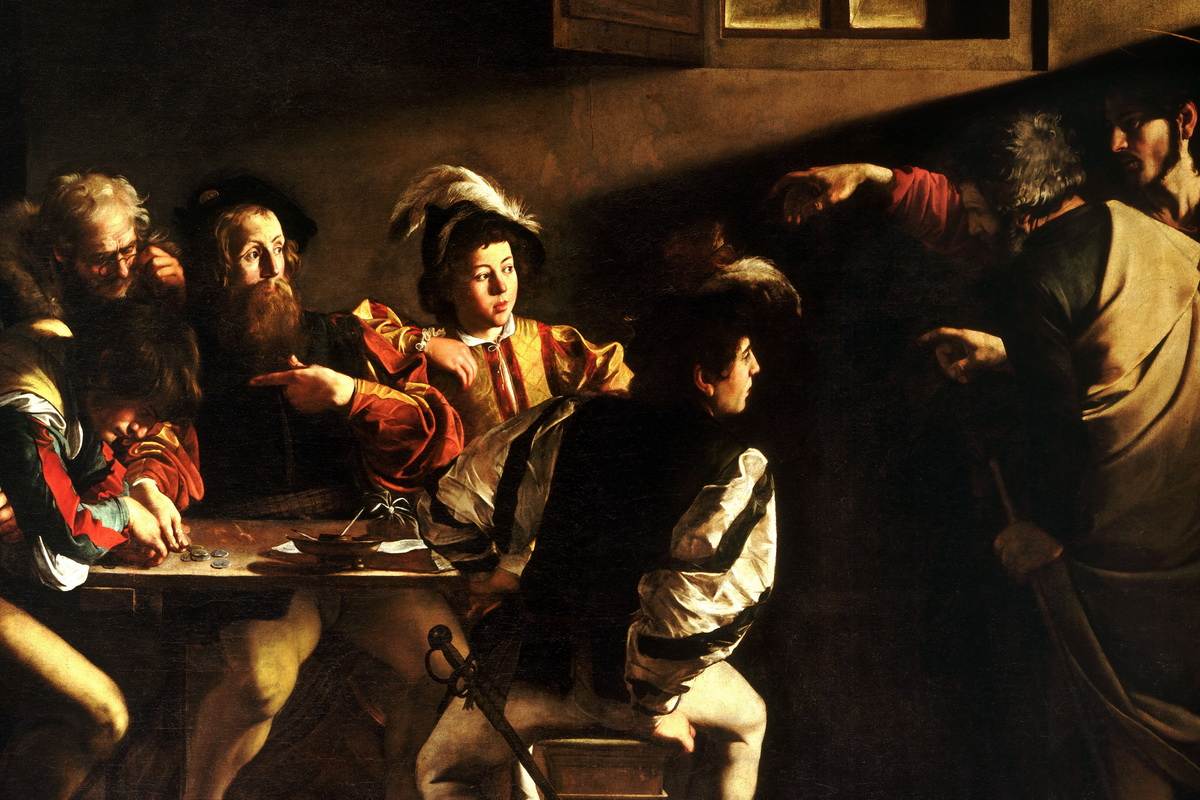
To paraphrase the Blur album title, modern art is rubbish. Post-modernism's war against truth and beauty has led to mountains of junk called "art" by elitist snobs where more effort goes into the titling and description card that hangs next to this claptrap explaining why some mess that could have been made by a brain-damaged wallaby on a meth jag represents abuse or systemic racism or the evils of late-stage capitalism. It's a scam and ugly. Go to a museum and look at works painted prior to the 20th Century when skill and technique were required and compare to current nonsense.

In fact, let me help you. This is Caravaggio's "The Calling of Saint Matthew":

And this is Robert Motherwell's "Elegy to the Spanish Republic No. 70":

QED

Now that we've established that I have a rightfully low opinion of modern art, let's talk about Made You Look: A True Story About Fake Art, a fast-paced documentary about how a bunch of super-wealthy elites paid millions for forged Abstract Expressionist (AbEx to the art snobs) paintings supposedly from Jackson "Expensive Drop Cloths My Specialty" Pollock and Mark "Rectangles Are Me" Rothko among other creators of sloppy claptrap that snooty doofuses chin-stroke over the energy of all that oily-black paint splattered all over a canvas. (Something about fools and money applies here.)

The tale starts in 1995 at New York City's oldest art shop, the Knoedler Gallery, which was in operation well prior to the Civil War, and the arrival of a woman named Glafir Rosales who claimed to represent an anonymous Mexican art collector who had come to America in the 1950s and bought tons of AbEx pieces on the cheap from the artists, but was looking to sell them. Starting with a Rothko (the rectangles guy) bought by the gallery's director, Ann Freedman, for the fire sale price of $750,000, eventually auctioning for $5.5 million. 

While the painting and the dozens more Rosales brought in over the next decade lacked the usual provenances, they were examined by numerous experts who deemed them authentic works of their respective artists. Eventually suspicions over the sheer quantity of supposedly unknown works - some of these artists like Pollock were extensively documented at work, yet none of these painting showed up lurking in the backgrounds of their studios - led to closer examination of the paintings and their eventual exposure which led to Freedman's resignation in disgrace ahead of the gallery's closing in 2011.

Beyond the absurd amounts of money for ugly paintings, the central question is how could such a scandal have occurred. Why didn't Freedman realize that how unlikely it is for so many paintings to come out of nowhere? One, two, even a dozen, perhaps; but over 60 works which sold for over $70M passed through her hands with her buying wildly below their auction value and flipping at great profit. As one talking head says, “Either she was complicit in it, or she was one of the stupidest people to have worked at an art gallery.” While it may seem judgemental, it's a question begging asking. Eventually one well-heeled victim sued and it went to trial forcing those who had authenticated the forgeries to explain how they'd blown it. The doc also hints that the trafficking was known to the gallery's owner, Michael Hammer (father of actor and cannibal wannabe Armie), who used the proceeds to keep the gallery solvent.

 As for where Rosales and her Spanish grifter boyfriend who used her as the face of the scam got the paintings, the answer is a Chinese national math professor who lived modestly in Queens. He'd come to America to pursue an art career, but when that didn't work out, he took to making fakes for his own amusement. In China, art reproduction is considered legit work and we're shown operations cranking out duplicates. When the scandal broke, he fled back to China (where he wouldn't be extradited), and refused to participate in the doc. While he's probably the least culpable in this fraud, it would've been nice to hear his story.

 Made You Look is of a piece with previous art docs like Who the #$&% is Jackson Pollock? (about a lower-class woman who found a Pollock painting in a thrift store, but the snooty art world refused to accept it) and My Kid Could Paint That (4-year-old girl becomes art world phenom until it's learned her father is the actual painter) - both of which my DVD reviews have disappeared online, darn it - where the hype and sophistry surrounding modern "art" makes one question whether the art itself is the point or it's just a elite intellectual class thing?

Score: 7/10. Catch it on Netflix.

"Monster Hunter" 4K Review


 I've been calling for an end to Christopher Nolan's career for some time now. It doesn't matter that up through Inception everything he made was very good to excellent (scores in the 7-9/10 range); in the ensuing decade he has made four stinkers - The Dark Knight Reloaded (4/10), Intersuckular (2/10), Dumbkirk (4/10), and simply abysmal Tenet (1/10) - and you can only grade on a curve because The Dark Knight rocked for so long. He's become too insulated from reality and, no, that Dumbkirk was Oscar nominated and the movies make money doesn't change the objective fact that they're bad movies and Nolan has lost the plot.

But at least for the first half of his career he made a string of quality movies. (He's like Rob Reiner, who racked up a string of top-flight films, then made North - which Roger Ebert infamously said in his review, "I hated this movie. Hated hated hated hated hated this movie. Hated it." - then never made another good movie again.) Maybe he'll come back like M. Night Shyamalan did for a moment before disappearing up his ass again. I'm not confident. 

But what explains the continuing career of Paul W.S. Anderson (not to be confused with the overrated Paul Thomas Anderson of Boogie Nights and There Will Be Blood)? He's directed 13 films and with a few scattered exceptions - the flawed-but-very good Event Horizon; perhaps the first Resident Evil; the 2008 Death Race was kinda fun; I know there's affection for his 1995 Mortal Kombat take - he has made some gawdawful trash, pretty much wrecking the career of his wife and frequent star Milla Jovovich. (In comparison, Hollywood only allowed Renny Harlin and Geena Davis to pair up twice, but The Long Kiss Goodnight was good. Come on, Milla, you used to be married to Luc Besson. Can't you tell the difference?)

 Despite cratering the Resident Evil franchise with the increasingly bad final three entries, Anderson is back wrecking another Capcom video game franchise with his adaptation of Monster Hunter, which is about...wait for it....hunting monsters. Yeah. It's deep.

Jovovich stars as Capt. Artemis - which anyone who saw Ready Player One recognizes as the Goddess of the Hunt which immediately alerts us as to how profound this movie is going to be (i.e. not profound) - who is in an unnamed desert with her squad of red shirts searching for a missing squad whose tracks simply end. When a big CGI storm swoops in like a discount version of Mad Max: Fury Road, they attempt to flee but when passing some stones with ancient markings on them, lightning strikes and they are transported to another desert of white dunes. They rapidly realize they're not in desert Kansas anymore when a big monster which can swim through the sand attacks their vehicles.

The survivors manage to make it to a rocky area with caves preventing it from following them, but are immediately beset upon by giant crab-spider looking things who manage to kill everyone in the squad except Artemis because they weren't married to the director. Womp womp! Soon she meets the Hunter (Tony Jaa), whom she initially fights because they can't communicate, but eventually forges an alliance with because he appears to know how to fight these monsters and she's only alive because it's been a day and she's married to the director. 

After the obligatory training montage to teach her how to use this world's weapons, they tag-team the monster - called a Diablos because even trying for a slightly original name would've been too much work (if it's from the game, hold your comments; don't care) - and then set off for a dark tower on the horizon (similar to the dark tower from the Dark Tower movie) which may have the means to return her home. Along the way they encounter an oasis with the sailing ship (reminiscent of Soul, but not a ripoff) we saw the Hunter fall off of in the prologue, captained by Ron Perlman, sporting a wig that makes him look like a grown-up Feral Kid from The Road Warrior, and speaking English because he decided to study the people being sucked through the portal stones, because that's how you learn English when there's no TV, I suppose.

 The rushed third act consists of Artemis and her new pals fighting to get her into one of the unstable portals to transport her back. Do any monsters follow her through and attack the military which comes to rescue her instantly? (Duh, it's in the trailer.) Luckily, Jaa and Perlman show up in time to help her and protect our world because SEQUEL, amirite? Pffft. 

I didn't go into Monster Hunter with any expectations of quality. The last chapter of the RE series, Resident Evil: The Final Chapter, was terrible even by the sinking standards of its predecessors, with spastic choppy editing that turned action scenes into incoherent noise. Anderson deploys the same meth addict aesthetic here as well, even during quiet scenes. At one point they encounter a mass of wrecked ships in the desert which was clearly practically built as a real set, but rather than allowing the viewer to appreciate the effort during a break in the action, it's cut-cut-cut-cut-cut-cut like Michael Bay at triple-speed.

 There's little else to discuss here. There are no characters - Artemis is a tough chick who has a wedding ring engraved "Forever" in a tin box in her pocket that we never learn about; the Hunter prays to a pair of small totems representing a dead wife and child; Perlman is Perlman - the action is adequate, the visual effects are mostly sufficient. There are monsters that are hunting and hunted....Monster Hunter.

The 4K presentation is bland. There aren't many colors that benefit and the dynamic range is OK, but nothing you'd demo your home theater with, much less watch a second time.

Score: 2/10. Skip it.


"Coming To America" Review


 The trend of incredibly belated sequels like Blade Runner 2049 (which came out 35 years after the original) continues next month with the release of Coming 2 America, the sequel to 1988 Eddie Murphy vehicle Coming To America, on Amazon Prime after its theatrical release was nuked by Hot Fad Plague 2020-21. I haven't seen the original entirely since it was in theaters, but a former co-worker (who suddenly passed away a year ago; I miss him) and I used to quote bits of the movie, especially the old Jewish man (also played by Murphy under Rick Baker's Oscar-nominated makeup) who hung out at the barbershop. 

Since the missus hadn't seen it and it had been 33 years for me, we decided to catch up on the original. She quickly fell asleep because, as I'm finding distressingly often lately, this comedy "classic" simply doesn't hold up beyond the parts people remember so fondly. It's similar to Bill & Ted's Excellent Adventure, which was never a great movie, but is really thin stuff now. (That it's sequels actually were significantly better bucks trends.) 

For the kids out there, Coming To America was the story of Akeem (Murphy), the crown prince of Zamunda (the fictional African country that's not Wakanda), who lives a life of ridiculous luxury, having even the most intimate personal hygiene performed by servants. On his 21st birthday, he is presented the woman whom it has been arranged for him to marry by his father, King Jaffe (James Earl Jones. Bored and disenchanted with his pampered life and not interested in marrying a woman who has no will of her own, having been raised to only serve her future husband, he begs his father to allow him to travel to America for 40 days. King, thinking it's just a Rumspringa-style break to "sow his Royal oats," approves.

Accompanied by his best friend and aide Semmi (Arsenio Hall), Akeem decides the best place to find a Queen of his own would be Queens, New York City. He requests the cab driver take him to the most common area of the borough and ends up in a rough neighborhood where their mountain of luggage is promptly stolen by the locals the moment their backs are turned. Posing as students, they move into a squalid apartment with a shared bathroom for the floor and set out to meet women. 

After an unsatisfactory (but amusing) tour of the clubs, Akeem and Semmi attend a local rally where Akeem spots Lisa McDowell (Shari Headley), a bright, independent woman when she gives a speech. Wanting to meet her, he and Semmi take jobs at her father's McDonald's knockoff, McDowell's. Concealing his true identity and reveling in doing manual labor, something Semmi does not share Akeem's enthusiasm for, he tries to get to know Lisa, who is dating Daryl (ER's Eric La Salle), a snotty heir to the Soul Glo hair relaxer fortune, which makes him prime husband material to her father (John Amos) to the extent that he announces Daryl's engagement to Lisa at a party without bothering to let Lisa know first. 

Taken by Akeem's polite charm, Lisa starts falling for him, but the usual spanners get thrown into the works when Semmi's telegram home requesting more money sparks an intervention by King Joffe and his wife (Madge Sinclair) as they rush to America to retrieve their wayward son, blowing his cover, and causing a rift between the lovers. Don't worry, it all works out in the end; no Romeo & Juliet double suicide ending here. 

What was so surprising about revisiting Coming To America was how dreadfully dull and slow-paced it is and how completely forgettable the core plot was. What has propped it up as a "comedy classic" is all the superfluous bits involving Murphy and Hall playing alternate characters disguised under Baker's makeup from the old barbers and Jewish man at the barbershop to a reverend and mediocre R&B singer fronting the band Sexual Chocolate. That the goofy sideshow material is what endures in the collective memory is a testament to the rote story. 

The core problem with the story, beyond its shallow familiarity, is the complete lack of a character arc for Akeem. He starts the movie bored with his life and seeking to break free of tradition and then does just that. Other than changing scenery, he doesn't evolve. If he had been a spoiled brat (like the Daryl character) and angered his father who then sent him to America to learn some humility amongst the poor folks, that would've been something. Instead he's always decent and good and just needs to get a like-minded decent girl to like him, too. Murphy is charming as Akeem, but only really unleashes his talents as the makeup characters. 

Beyond the script, most of the blame lands on director John Landis' shoulders. After a streak of genuine classics - he did The Kentucky Fried Movie, Animal House, The Blues Brothers, An American Werewolf in London, and Trading Places - he never had another critical or commercial hit after the tragic accident which occurred while filming his segment of the Twilight Zone movie other than Coming To America. (While Trading Places filmed after the accident, something clearly broke in Landis and the CTA gig was a charity offering from Murphy and they butted heads during filming.) Clocking in at nearly two hours, everything drags and lacks energy. 

The sequel was directed by Craig Brewer (Hustle & Flow) who last teamed with Murphy for the very entertaining Netflix biopic My Name Is Dolomite. While the premise is a head-scratcher (Akeem finds out he has a son in America, but since he never has sex with anyone in the first movie, um, whut?) and they're bringing back the barbershop guys (who looked to be at least in their 60s, so shouldn't they be dead by now?), there's not much of a bar to clear to be an improvement over the original. We'll see.

Score: 4/10. Skip it and watch the barbershop (note Cuba Gooding Jr. as the customer), Sexual Chocolate, and robbery (with Samuel L. Jackson!) scenes on YouTube.

"Romeo Is Bleeding" DVD Review


I couldn't remember much about the 1993 noir crime drama Romeo Is Bleeding other than one shot (which is one of the great foreshadowing bits in movies), that co-star Lena Olin was hot, and that it was a pretty good movie. After revisiting it for the first time in easily 20-plus years, only the first two points hold up.

 Update 5/14/2024: I finally reviewed the movie here. Different score and recommendation.

 As for DVD quality, can't recall and DVD is like VHS to me, so pass on that. Watched it in HD and that was fine looking.

Score: 5/10. Catch it on cable.

"Climax" Review


Unlike fellow art house film provocateur Lars Von Trier, France-based Argentinian Gaspar Noé is lesser known to all but the most left-of-the-dial cinephiles, having made only five feature films in 20 years. The only one of his films I've seen is Irreversible, his 2002 sophomore effort which most people know due to its Memento-style structure (where it begins at the end of the story and each successive scene happens chronologically before) and the notorious scenes where a man is graphically murdered with a fire extinguisher in the opening scene and where Monica Bellucci is raped in an excruciatingly long single take. It's a good movie, but rather rough stuff. 

Prior to Climax, Noé's previous film was Love, which was on Netflix at the same time as Judd Apatow's series of the same name, which surely led to some people who were looking for a light rom-com co-starring Gillian Jacobs (Brita from Community) to be confronted with a dimly-lit opening scene of unsimulated sexual activity. HBO it wasn't! (And it was theatrically presented in 3D!)

So with the introduction of who would make such a movie as Climax out of the way, here is what happens in a movie which has this as its IMDB synopsis: "French dancers gather in a remote, empty school building to rehearse on a wintry night. The all-night celebration morphs into a hallucinatory nightmare when they learn their sangria is laced with LSD."

  • A woman is seen from high above staggering through the snow before collapsing.
  • We then see a bunch of videos of people talking about their dance career aspirations filmed on a old TV screen.
  • The end credits roll in reverse off the top of the screen.
  • In an unbroken shot, all the dancers who were interviewed do a loosely-choreographed dance sequence like a line up at a rave. Lots of krumping and flailing about.
  • Afterwards they drink sangria and we get fragments of obviously improvised dialog where pairs of dancers discuss who they want to have sex with and other banal topics.
  • Then the cast members names flash on the screen in wildly formatted fonts - Noé's name appears several times - and we get another dance number shot from above which renders the spastic motions boring because all dimension is missing. Busby Berkeley this ain't!
  • Then the drugs kick in and everyone proceeds to freak out, accusing each other of being the culprit, throwing one person out in the cold, leading to people having sex or trying to kill each other, with plenty of screaming from everyone.
  • The next morning, those who aren't dead are cuddled up with whomever they paired off with.

There is actually less plot to it than the bullet points may suggest. There's some dancing, a lot of talking, then it becomes a nightmare shown in (what I've read is) a 43-minute uncut shot. (Usually there are points where you can tell they've stitch segments together (like in 1917), but here it could actually have gone down as one bonkers Steadicam move through murkily-lit hallways bathed in lurid reds and sickly greens.

The only familiar face in the cast of unknowns is Sofia Boutella (The Mummy, Atomic Blonde) who used to be a professional dancer who toured with Madonna and Rihanna before starting in movies as the knife-legged chick in Kingsman: The Secret Service. While not really the lead, she gets slightly more screentime, but is limited to mostly screaming, flailing about, and screaming some more. What a waste of an exotic beauty.

I watched this on Amazon Prime Video in four or five chunks over a couple of weeks, despite being only 90 minutes long, because there was so little point to any of it, but I still wanted to see where the heck this mess was going, which ultimately turned out to be in circles and nowhere. Even as an experimental film, it's still a self-indulgent mess. 

Score: 2/10. Skip it.

"American Animals" Review


Considering how many movies have the word "American" in their titles - American Sniper, American Splendor, American Pastoral, American Made, American Assassin, American Pie in the past two decades alone - it would be understandable to glide right past American Animals (a reference to Charles Darwin's Origins of the Species) because it doesn't even hint at what it's about, but here's why you should check it out: It's an interesting hybrid of a docudrama, caper heist flick, AND documentary.

Based on an actual incident in 2004, it's the story of art student Spencer Reinhard (Barry Keoghan, Dunkirk), who takes a tour of his college's (Transylvania University, which is in Lexington, KY, not Dracula's neck of Eastern Europe), rare book collection which includes some impressive items including first editions of John James Audubon's The Birds of America and Origin of the Species. Bored and seeking excitement and/or inspiration, he enlists childhood pal Warren Lipka (Evan Peters, American Horror Story, Quicksilver in the later X-Men movies) in developing a plan to heist the books and fence them in Amsterdam. 

Since the book collection is on the second floor of the university library in a secured room and can only be accessed by appointment with an employee present, they realize they will need more hands and they loop in friends Chas (Blake Jenner, Glee) and Eric (Jared Abrahamson, nothing you've heard of) as wheelman and lookout, respectively. After extensive planning, they make an attempt at the heist in old man makeup and clothes that look like an AARP-endorsed version of the Beastie Boys "Sabotage" video, aborting when there are too many people in the book room. However, they make a second run the next day which goes.....well, you'll see. 

Despite trying to take care in their planning, their sheer incompetence and general lack of killer criminal instincts become their undoing. Apparently it took the FBI weeks to apprehend this gang who couldn't steal straight, but it really should've taken them a couple of days if they actually left so many loaves of bread for law enforcement to follow back to those who dropped them.

Where American Animals elevates the caper flick game is the integration of the real perpetrators (and to a lesser extent their families) in documentary talking head interviews. At one point, when there are differing recollections of how an event transpired, a real person is placed on screen next to their re-enactor which also introduces an element of unreliable narration as the gang have Roshomon-like differences in what went down ranging from what color a scarf was to whether one member actually did what he claimed to have done.

While using actors to dramatize events is a standard move for everything from America's Most Wanted to documentaries including writer-director Bart Layton's previous film, The Imposter (about a con man who convinced a Texas family he was their long-lost son despite looking nothing like the missing boy, being much older, and having a French accent which is worth watching, too), American Animals inverts the ratio to make the real people commentators on the recreation. What could've been a cheesy gimmick works quite well and frankly could've been used more because they're charismatic and appealing fellows despite being felons. (In another odd wrinkle, the real people are actually mostly more attractive than their actors.)

 The pace gets a bit slack towards the end, but overall American Animals proves truth can be stranger than fiction and that sometimes fictionalizing true events is best served by having the real people narrating. For that alone, it's worth checking out.

Score: 7/10. Catch it on cable. (Currently available on Amazon Prime Video and Hulu.)


"MI-5" Blu-ray Review

 This was a looting pickup from a closing Family Video, chosen because it starred Jon Snow (aka Kit Harrington) and looked like a spy action flick and cost 75 cents. While the movie somewhat delivers on its billing, it has a crucial detail which made it extremely unsatisfying to engage with: It's a spinoff film from a British TV series I'd never heard of called Spooks which ran for 10 series (86 episodes) from 2002-2012 (and was called MI-5 in the USA) with this film coming out in 2015 under the title Spooks: The Greater Good. Watching this would be like watching a 24 spinoff without knowing the show and its hero, Jack Bauer (Keifer Sutherland). 

Here is the synopsis of MI-5: The Motion: "When a terrorist escapes custody during a routine handover, Will Holloway (Harrington) must team with disgraced MI5 Intelligence Chief Harry Pearce (Peter Firth) to track him down before an imminent terrorist attack on London."

That's pretty much the movie. Pearce was the main character in the series and I guess if you were a fan of the show, what happens to him and what he does would carry more resonance, but since I wasn't, it didn't. It was fairly easy to spot some of the twists with the others being totally out of left field. It was more entertaining looking up the couple of familiar faces from American TV shows and discovering they were actually British including David Harewood (Martian Manhunter on Supergirl) and Eleanor Matsuura (Yumiko on The Walking Dead and Baron Chau on Into The Badlands). 

Because it relied on familiarity with the Spooks cast other than new additions Harrington and Jennifer Ehle (who's a ringer for Miranda Otto), I just couldn't work up much enthusiasm for a fairly beige spy thriller. If you're a fan of the show, have at it. Otherwise...

Score: 3/10. Skip it.  

"The Little Things" Review


All too often you see movies where at the end you're left wondering if anyone involved with the project actually read the script and recognized how illogical and unsatisfying it would be. Such is the case with John Lee Hancock's (The Blind Side) latest film - which is getting the simultaneous theatrical/HBO Max release treatment Wonder Woman 1984 and the entire 2021 Warner Bros slate is getting - which wastes the talents and time of its all-Oscar-winning lead cast.

Denzel Washington stars as Joe Deacon, a rural California county sheriff's deputy who is sent to Los Angeles to retrieve evidence for a local case. He is highly reluctant to go because he used to be a detective for the L.A. Country Sheriff's and left five years before under circumstances the film doles out slowly throughout. 

While there he meets his spiritual successor, a young hotshot detective, Jimmy Baxter (Rami Malek), who is lead investigator for a series of unsolved murders involving young women which are reminiscent of a case that wrecked Deacon's life, health, marriage, and career. After some obligatory turf-warring, they join forces to try and crack the case with Deacon's old dog teaching Baxter's pup some new tricks. 

Their hunt rapidly focuses on Albert Sparma (Jared Leto - whose name alone may as well be Murdery McMurderer), an exceedingly greasy and hinky character who is so obviously the killer that he can't possibly be the killer. While he taunts the detectives, he once made a false confession to a murder years previously, so what's his deal?

Set in oddly-specific-for-no-reason October 1990 (probably to remove ubiquitous cell phones from the mix and make communications harder) The Little Things presents itself as low-key mystery thriller, but if not for the overpowered cast, the plot would barely qualify as a Law & Order episode plot. Hancock - who apparently wrote the script in the 1990s and couldn't make it until now, which is never a great sign for a story -  drips out Deacon's backstory and literally haunts him with the women whose murders he couldn't solve, but the farther along the plot progresses, he begins to conceal more than he reveals in order to maintain a mystery that's only sustained through narrative chicanery. 

Things really go off the rails in the third act when characters suddenly get very stupid and seemingly change personalities in order for the events to transpire. This leads to a denouement that is both inconclusive and unsatisfying, raising more questions than it answers. Considering Hancock's track record of entertaining, if lightweight, movies like The Rookie, The Blind Side, and The Founder (dude has a thing for definite articles, doesn't he?), that The Little Things ends up so drab and forgettable and troubling is an unwelcome departure from form. 

Performance-wise, Denzel is Denzel, but subdued. Carrying more weight than usual, he embodies the broken, haunted man Deacon has become. Occasionally there are the typical flashes of Denzel charisma (which his son, John David Washington of BlackKklansman and Tenet most certainly hasn't inherited), but not distractingly. Malek never really registers. Either his character is written too flat or he doesn't know how to make him three-dimensional. The MVP is Leto, who gives a flamboyant, but not cartoonish, performance as Sparma which makes the viewer question whether he's the killer or not, but is ultimately let down by the inconclusive script. 

Despite its pedigree, the fact The Little Things was slated for late-January release and not Oscar season, even allowing for the havoc wreaked by Hot Fad Plague 2020-21, shows the studio knew it wasn't much of an awards prospect. I wasn't even aware this movie existed until a few days before its release. Frankly, if not for the stars, it would be an ignored TV movie or something that showed up on Netflix with no fanfare. Even with the stars and the option to not have to leave the house to watch it on HBO Max, it's the not-so-little-thing called the weak script that make it not worth the time.

Score: 4/10. Skip it.

"The Bee Gees: How Can You Mend A Broken Heart" Review


 What do you think of when you hear the name or music of the Bee Gees? Falsettos, white polyester, disco, and Saturday Night Fever, right? For right or wrong, their association with the top-selling movie soundtrack album in history is going to be what goes on their tombstones, but even if you're middle-aged you may be unaware of the long, repeated Lazarus act career of the Brothers Gibb (get it, BGs?) prior to the apex of disco fever.

Filling in and expanding the legacy of the Bee Gees is the mission of The Bee Gees: How Can You Mend A Broken Heart, the new documentary exclusive on HBO Max. Using archive interview footage of fraternal twins Robin and Maurice Gibb (who died in 2012 and 2003, respectively) and sole surviving eldest brother Barry along with family and musicians including Justin Timberlake (whose participating in the SNL "Barry Gibb Talk Show" sketches with Jimmy Fallon are NOT referenced), Oasis' Noel Gallagher, and several members of their live band over the eras, the doc recounts the brothers earliest days as Brits who'd moved to Australia then returned to England after feeling constrained by Oz's small market.

 Their father/manager sent tapes to The Beatles' impresario Brian Epstein who then passed them to his protege Robert Stigwood who recognized their talent and signed them in early 1967. Within a few months they had their first two smash hits with "New York Mining Disaster 1941" and "To Love Somebody." But with the sudden success - Robin had SIX Rolls Royces before he was 21! - the brothers began to drift apart, finally breaking up in 1969. 

But in what would become a phoenix-like pattern, they reunited a couple years later and shortly were atop the charts again with tunes including "How Can You Mend A Broken Heart" but were eventually back in a slump and on the verge of being dropped. Taking the suggestion of Eric Clapton, who had just kicked years of addiction, they moved to Miami and moved into the house Clapton had stayed while recording his comeback album entitled with the address, 461 Ocean Boulevard. 

Working with Atlantic Records producer Arif Mardin, whose suggestion for Barry to try some high-pitched overdubs on "Nights On Broadway" revealed what would become their trademark falsettos and powered that and "Jive Talkin'" as hits. Their two Miami-recorded albums, Main Course and Children of the World, which included "You Should Be Dancing" made them Kings of Disco. Naturally, this led to their being included in the soundtrack of the movie Stigwood was producing starring a fresh young TV star named John Travolta and the rest was infamy. 

When the backlash to the ubiquity of disco hit in 1979, the Bee Gees bore the brunt of it since they were the biggest names in the game. Disco was dead and anyone associated with it had to be expunged from polite society. The irony is that while Saturday Night Fever is considered to have blown disco into the mainstream, it was actual the thing that prolonged a dying genre's lifespan a couple more years; it had already become played out when the movie hit. 

But as they'd done before, the brothers shifted from being performers to songwriters for hire and proceeded to rack up hits for Barbara Streisand ("Guilty"), Dionne Warwick ("Heartbreaker") and Kenny Rogers and Dolly Parton ("Islands In The Stream"). They gradually were able to record hits, mostly outside the USA, later in the 1980s and were inducted into the Rock & Roll Hall of Fame in 1997, which only seems odd if you only knew them from their disco days.

At its best, The Bee Gees: How Can You Mend A Broken Heart is a very informative overview of a group which had a career that spanned decades, but almost all of it was obliterated from the public consciousness for their association with Saturday Night Fever which is but two years of their lives. (No one just things of The Wall when thinking of Pink Floyd, do they?)

But where the doc falls short is in the total omission of their involvement in the Sgt. Pepper's Lonely Hearts Club Band movie - which co-starred fellow rocker-turned-simpy-pop-idol Peter Frampton - and the egregious journey into revisionist history which has been attempted against the notorious Disco Demolition Night riot in Chicago on July 12, 1979 which is considered the death knell of disco. 

The facts of that event are that Chicago shock jock and not-disco-fan Steve Dahl staged the event where anyone who brought a disco record to Comiskey Park could get a ticket to the double-header between the Detroit Tigers and Chicago White Sox for 98 cents. The bin of records was blown up during the intermission between the games and when the fans stormed the field and tore the place up, that was it for baseball game and the Sox forfeited the second game.

However, in recent years as social justice warrior wokeness has spread to suck every bit of joy from life, Disco Demolition Night has been falsely portrayed as a racist backlash by white straight male bigots to the music made and enjoyed by gays and people of color. The documentary features a black man who worked as an usher at the game who reports seeing Stevie Wonder and Marvin Gaye albums being turned in and since those aren't disco records, there could be no explanation other than white supremacy and racism in his or the film's eyes. (The idea that a bunch of rowdy rockers looking for a cheap night at the ballgame grabbed whatever disco-looking LP they could find to get the deal while lacking any racist intent isn't possible; no, it's RAAAAAAAAAAAAACISM!!!!)

Disco Demolition Night got extra play in my memory because being a Detroiter meant it happened on my local sportball team's time. There was also as similar anti-disco movement happening the Motor City with AOR station WRIF operating a group called D.R.E.A.D. (Detroit Rockers Engaged In The Abolition of Disco) where membership cards could be flashed at merchants for discounts. It was a marketing stunt, not a hate movement and it's especially hard to claim Detroit was a hotbed of seething white racism considering it's biggest non-automotive export was the music of Motown. 

Contemporaneous with the backlash against disco was the backlash against boring rock music in the form of punk/New Wave, but you don't see anyone claiming pasty white kids were being racist against tanned California rockers like The Eagles and Fleetwood Mac, do you? In 1991, grunge blew up as the backlash to hair metal and slick Eighties pop. Then the turn of the Millennium brought a round of boy bands and Mousekabimbos to backlash against the miserable whining of grunge. That sparked the garage band days of the White Stripes et al and so on and on and on. When any generation gets bored of what corporate music pimps are cramming down their throats, they want something else, but for some reason the wokesters have decided that disco needs an oppression myth and Disco Demolition Night is their vehicle.

/rant

With the above caveats, The Bee Gees: How Can You Mend A Broken Heart is still a worthy primer on a talented and ultimately tragic family act - the youngest brother, Andy, who had his own massive pop star career, died only five days after his 30th birthday from years of substance abuse in 1988 - that had several mini-careers in their lives. Even if you don't want to forgive them for their disco crimes against music or aren't fond of their schmaltzy pop stylings, it's still an enlightening musical journey worth taking.

Score: 7/10. Catch it on HBO Max. 


"The Social Network" Blu-ray Review


A favorite of mine as David Fincher's 2010 mythologized telling of the invention of Facebook (which I call FaceSpace) simply crackles from Aaron Sorkin's Oscar-winning adapted screenplay (I still want to know if the mic-drop, engrave the trophy line, "If your clients had invented Facebook, they would've invented Facebook." was an actual deposition quote or a brilliant invention), plus Oscar-winning editing and score, the latter by Nine Inch Nails' Trent Reznor and Atticus Ross, who most recently scored Pixar's Soul. In retropect, that it lost for Best Picture and Direction to the forgotten Oscar-bait historical biopic The King's Speech is just another in a long list of shameful Academy missteps.

It's interesting revisiting The Social Network now because it came out only six years after FaceSpace's founding and it was still somewhat of a scrappy little upstart. As the closing text informs us, it was worth $25 billion, which seems like a heck of a lot of money until you realize that as if this writing its market cap is $782 billion. They've also swelled from about 600 million users - as the brilliant tagline said, "You don't get to 500 million friends without making a few enemies." - to about 2.6 BILLION users, with over 1.7B of them visiting the site daily.                                                 

What the movie doesn't even hint at what would become of the social network as it became a Big Tech monopoly power fueled by billions of dopamine-addicted, affirmation-craving users who would rely on it and their closed circles of like-minded "friends" for their information (and misinformation) and how to feel about it. The movie focuses on the money being made, but not what the site actually did. 

As we saw during the lockdowns from Hot Fad Plague 2020 (which left people with little to do but tribe up and fight each other) and the run-up to the 2020 Elections (and the ensuing Big Tech censorship crackdown that occurred once Democrats had seized total control of the Federal government), Mark Zuckerberg, Twitter's Jack Dorsey, Apple's Tim Cook, Google Sundar Pichai, and Amazon's Jeff Bezos, comprising a small cabal of oligarchs in total control of the platforms, what information is allowed to be spread, throttling or outright deplatforming "wrongthought", would convert what may've been intended as a means for freedom of speech and a way to facilitate associations into a censorious police state where the end game may be their acting as an intelligence-gathering arm of government. (Sounds paranoid, but when truthful news is blocked and speaking facts that the Big Tech bosses don't like gets you unpersoned, how much of a stretch is it to find a "national security" pretense to see who's posting "anti-government" speech? Exactly.)

On the technical side, the transfer is clean since it's digitally sourced from RED camera. Fincher likes flat contrast, short lighting (where the light comes from behind the subjects), and drab colors, so there's little flash to look at. On the audio side though, the superiority of physical media over streaming is displayed by a booming DTS-HD soundtrack which really puts the boom in the room from the musical score. (Streaming is bitrate-limited Dolby Digital+ at best.) The opening scene in the bar is concerning as the dialog has to fight the environmental sound, but that's a (dubious) artistic choice as the rest of the movie is clearly understandable. 

Another plus for physical is the Blu-ray set comes with a raft of extras. I haven't listened to the two commentary tracks, one my Fincher and the other by Sorkin with the cast, but there's an entire second disc including a hour-and-a-half documentary making-of plus several other craft-specific featurettes which I've watched in the past and recall are quite informative. (I miss bunches of extras, another casualty of the shift to streaming for everything.)

While there are substantial fictionalizations in the telling of The Social Network, it's still truthful enough and most importantly entertaining enough to merit watching and collecting. The irony is that there's no way a movie like this which even cast the least bit of shade on oligarchs like Zuckerberg could be made today. Worth over $100 billion, he now has the power to topple a President and ban him from his site, so who would be able to portray him as a mildly sociopathic jerk of a nerd? Exactly.

Score: 9/10. Buy it. 

"Sound of Metal" Review


UPDATE: This movie garnered an appalling six Oscar nominations for Best Picture, Actor, Supporting Actor, Original Screenplay, Sound, and Editing. The problematic ones are Picture and Screenplay. 2020 was a bad year and the Oscar nominations reflect it.

-------

The most devastating thing that can happen to most musicians not related to physical infirmities like losing your hands would be losing your hearing. Other than Beethoven, there's not a lot of musicians known for performing while stone deaf and even good ol' Ludwig van was a composer and they can tell what music sounds like from reading the score. In general, "deaf musician" is as workable as "blind sniper." As a musician myself, it was with some interest that I approached Sound of Metal, the story of a drummer (and thus not a musician, hiyo!) whose life is upended when he suddenly goes deaf. Unfortunately, it's a woefully told tale.

 Riz Ahmed (The Night Of, Star Wars: Rogue One) stars as Ruben, the drummer in a two-man band with his girlfriend Lou (Olivia Cooke, Ready Player One) which is like a gender-flipped White Stripes except not good. While on tour, Ruben begins to experience profound hearing loss. Advised by a doctor that he may be able to salvage what remains of his hearing if he avoids loud noises (kind of difficult in his line of work), he naturally ignores the advice and blows out what remains. 

As a former junkie, Lou is worried that he'll relapse and gets the name of a program, a facility in a rural area for the deaf run by a deaf, recovering alcoholic, Vietnam veteran named Joe (Paul Raci). In meeting him, he lays down the strict rules of the place to Ruben, no contact with the outside world, everyone works, focusing on adapting to their condition. Lou has to go and Ruben initially rebels.

 Eventually he gets with the program, but is sneaking looks on a computer to see what Lou is doing, as she eventually starts doing music on her own. He sells his gear and the RV they lived and toured in to fund cochlear implants to restore his hearing, ultimately getting the surgery done. But because Joe and his group believe deafness isn't a handicap, Ruben is expelled from the group.

He  goes to Lou's father's house where we learn a whole bunch of backstory about her family; her mother committed suicide and her father is a wealthy French musician. Their reunion is strained and they end up parting.

 I only spell out the entire plot because there is so little to it and it ends up going nowhere slow. Why the sudden heavy stuff at the end? Why does Joe, knowing Ruben is a junkie and, rejected and cast out, likely to relapse, pretty much condemned to die for not adhering to the "we are not broken" mentality without care for how Ruben wants to live? That the cochlear implants don't sound right implies he wasn't counseled as to expectations beforehand or calibrated over time afterwards; it's not like getting a tooth filled. Also, the leap between Ruben resisting learning sign language and being shown as fluent is literally a hard cut to the next scene without as much as a "Six Months Later" or learning montage. It's as if a reel was missing.

The performances from Ahmed and Raci are very good, though Ruben being thinly-written means the Ahmed has to inflate the character himself. Press materials claimed he studied the drums for six months in order to appear credible playing, but that's laughable as all we ever see the band doing is bashing the finale chords of songs. Anyone could sit down and do what's shown. Tara Reid plays drums more credibly in Josie and the Pussycats and she's hit-and-miss in her accuracy. (Miles Teller in Whiplash fakes it really well.)

Raci is fine, but he is in real life not hearing impaired, but the child of deaf parents. This means he speaks perfectly clearly and not with the voice modulation issues that deaf people like Marlee Matlin (who won an Oscar for Children of a Lesser God) exhibit and this makes it hard to believe he is deaf. While those who go deaf as adults manifest less of the warble, they still have it; just record yourself talking with your ears plugged to see. 

One thing the movie really does well at is capture the sound of hearing impairment, muffling frequencies to get us in Ruben's head. (A Quiet Place did this as well with the daughter.) 

Despite a promising premise and good performances, Sound of Metal simply doesn't understand what it's trying to say as well as it imagines and ends up frustratingly inert.

Score: 4/10. Skip it.

"Skin: A History of Nudity in the Movies" Review


There's a certain appropriate poetry that one of the executive producers of Skin: A History of Nudity in the Movies is "Mr. Skin" - the nom de cyber of one Jim McBride who has built an Internet Mecca of the same name, exhaustively cataloging the onscreen nudity in movies under the rubric of "fast-forwarding to the good parts" - as the documentary is almost a two-hour commercial for the site disguised as a lengthy history lesson and analysis of the subject.

As the trailer below details, Skin traces the progression of the exposure of flesh and depictions of sexuality on film from the late-19th Century through the current early-21st Century. With film historians, movie trades writers, filmmakers and lots of actors and actresses who've appeared in the more notorious films discussed plus, naturally, loads of illustrative footage, the viewer is treated to an overview of changing mores and how filmmakers continually pushed the envelope to make even more money under the guise of loosening up the squares.

Throughout there are some nice bits of trivia like how uber-cheapie producer Roger Corman realized that the MPAA never looked at movies in the theaters after they'd been rated, so they'd make cuts to attain the desired rating (usually R), then put that material back in and send it out to the drive-ins. Actresses discuss the pressures to show themselves and the sometimes harsh conditions they had to work under. (Women in prison shower fight scenes were particularly rough because the water would be freezing cold.) 

Sean Young discusses her audition for No Way Out  where the director asked her to lift up her top to show that she didn't have any scars and that actresses have to ride a line between being attractive enough to have producers want to hire them but not be so hot as to be only hired for nudity. Of course it's "lookest" to notice which actresses are still looking good into their 40s, 50s, and even 60s (Betsy Russell, Rena Riffel) and those who aren't (Linda Blair, yikes).

It's to Skin's credit that a two-hour clip show of nudity manages to come off as educational and not just prurient, but with so much history to cover it's unavoidably only a skin-deep perusal of the topic. It opens with lots of discussion of the #MeToo era that would've been better covered at the end given the chronological format and recency of the Harvey Weinstein scandal and while delving into the casting couch aspects of Hollywood would've been off topic, the demands of nudity during auditions as mentioned by Young and Showgirls's Rena Riffel (though to be fair, when you're playing a stripper...) could've been touched upon since the newly prominent role of "intimacy coordinators" is broached.

Still, it's got lots of bewbz, so it delivers on Mr. Skin's promise. 

Score: 7/10. Catch it on cable. (Currently on Hulu)

"The Rundown" Review


 It's getting hard to remember now that Dwayne Johnson used to be known only as "The Rock" (the same way John Mellencamp used to be John Cougar), but that's the name he was going under when 2003's The Rundown was released. Only his third feature role, after playing the Scorpion King in The Mummy Returns and its eponymous spinoff, it was seen as his entree into mainstream action movie stardom, filling the void left as Ahnuld Schwarzenegger (who makes a meta torch-passing blink-and-miss-it cameo) had become the Governator of California at that time.

 Rock plays Beck (not the musician), a "retrieval expert" (read: bounty hunter), whom we meet listening to a chef discussing mushrooms on the radio while he awaits admittance into a swank club where a debtor needs dealing with. After that splashy set piece, we get into the main plot as the mobster he works for offers him the proverbial One Last Gig which will free him from some unspecified obligation to the boss, plus give him the money needed to open his dream restaurant, thus the cooking show he's listening to.

The gig is to go to Brazil where the boss's son, lets call him Stifler because Seann William Scott plays him and the character is the same Stifler part Stifler has played since American Pie, has been treasure hunting in the Amazonian rain forest. Junior owes some other boss and apparently daddy wants him to face the music, so Beck is off to run him down. 

 Getting to the butt end of nowhere, Beck finds himself in a squalid mining town where the locals toil in near-slavery conditions in the massive open pit gold mines run by Christopher Walken's character, who may as well also be named Christopher Walken. (Frankly, only The Rock and Rosario Dawson, playing a barmaid with an interesting side gig, seem to be playing actual characters.) Knowing that operating in such a boss's turf without permission could be difficult, Beck attempts to ingratiate himself to Walken and gets his blessing which lasts only a while before he renegs after learning Stifler claims to have found a legendary golden artifact called O Gato do Diablo (The Devil's Cat) in a lost jungle temple.

 So the race is on as Beck finds Stifler and attempts to get him to the airstrip for the ride home before Walken's forces find them and force Stifler to take them to the treasure. Complicating matters is that Stifler is a massively annoying twerp (which makes it very satisfying whenever Beck clocks him) who knows how to survive in a jungle while Beck isn't more an urban jungle kind of fellow. This leads to encounters with local rebels and horny monkeys (don't ask) and all sorts of hijinks ensuing.

One thing that has always elevated Johnson above many other musclebound matinee men has been ability to calibrate his performances to the kind of movies he's been in with a surprising acting range capable of drama and comedy, which he has a rather deft touch. The Rundown was his first showcase for what would typify his career, though looking over his filmography, other than his role as a closeted gay wannabe country singer goon (not kidding!) in 2005's Be Cool, it would take until 2011 and his introduction as Luke Hobbs in Fast Five, the movie which transformed the Fast & Furious franchise into the juggernaut, that all the pieces came together material-wise.

Once you get over seeing him with hair and looking relatively "small" in stature compared to his current meat mountain size - he's still brawny; just saying he's amped it up insanely over the years - The Rundown shows that he was Big Movie Star material early on. Actor-turned-director Peter Berg (in his second feature; he'd go on to direct Friday Night Lights, Lone Survivor, Patriots Day, and others) shows a good touch managing the action clearly and the comedy. Stifler is annoying as always, Dawson is caliente, and Walken is in Full Walken mode like Jeff Goldblum is Full Goldblum these days.

Somewhat forgotten like most of his aughts oeuvre, The Rundown should be caught by fans of Johnson. 

Score: 7/10. Catch it on cable.  

"Let Me In" Blu-ray Review


In checking for previous reviews here for this film, I discovered my original theatrical review, seen exactly 10 years and two weeks ago was finished, but never posted. Now it's up and you can read my thoughts which have not changed in the intervening decade, although my score then was higher (8.5 vs. 7). 

I still don't care for the obvious CGI used for Moretz's vampire scenes, but I've read subsequently that director Matthew Reeves - who went on to direct the superior Planet of the Apes reboot sequels and is currently making The Batman - deliberately when for that artificial look to

On the technical side of this Blu-ray, the shallow-focus, monochromatic-scheme cinematography makes for a soft and stylized image that's representative of the film's intent, but not anything you'd show off your home theater with. In a couple of scenes, the murkiness looked blotchy, but those moments are fleeting. On the audio front, the Dolby TrueHD 5.1 audio track is clear and has a wide dynamic range which could startle your pets if you turn it up to better hear the quiet dialog and then one of the several BOOM audio moments occur.

 There's a commentary and good smattering of making-of featurettes. I recall looking at those back when this hit video, but never reviewed because I hadn't watched the movie. They were decent, IIRC.

Let Me In is a good, quiet, excellently-acted horror film. It's just a bit less substantive on second viewing.

Score: 7/10. Rent it.


"The Big Hit" Review


Previously reviewed here.

Score: 8.5/10. Buy it.


"World War Z" Blu-ray Review


I haven't rewatched the 2013 fast-running zombie flick World War Z since its initial theatrical run (review here) and after watching this Blu-ray, nothing much has changed in my take on it's inconsistent storytelling. The unrated cut adds some extra violence and gore, especially noticed with the poor Israeli soldier's bite treatment scene, but nothing too over-the-top; The Walking Dead routinely has much worse.

It's interesting to see actors pop up who went on to greater nerd culture notoriety in subsequent years: Peter Capaldi, a WHO doctor, went on to be a Doctor on Doctor Who; Ruth Negga (another WHO worker) went on to Agents of S.H.I.E.L.D. and Preacher and garnered an Oscar nomination for Loving; Mireille Enos is Hanna's ally in Amazon Prime's Hanna series.

On the technical front, the 2.40:1 aspect transfer is OK, but nothing to write home about. The cinematography and color-grading - drab and naturalistic in the first act, high-contrast and dark in Korea, warm straw tones in Israel, etc. - don't provide much showcase opportunities, but the DTS-HD Master Audio 7.1 audio track is good with plenty of surround activity and LFE rumble. 

There are about 53 minutes of featurettes discussing the development of the movie from a book not really laid out for straight adaptation; the scientific premises applied to this portrayal of zombies; and a four-part making-of discussing the production of various major settings. It's all rather lightweight other than surprises that Glasgow, Scotland doubled Philadelphia for the initial outbreak sequence (with some changes in street signs, digital landscape enhancement, and lots of imported cars) and Malta filled in for Israel. No mention of the film's abandoned third act that I'd hope would be included in my theatrical review.

World War Z is a pretty good zombie action flick held back from excellence by some dippy plot choices. The Blu-ray is as adequate as the film.

Score: 6/10.  Rent it.

"John Was Trying to Contact Aliens" Review


The missus and I had a little time to kill before the 11 o'clock news came on and decided this would be the perfect opportunity to knock off the oddly-titled, 16-minute-long John Was Trying to Contact Aliens, which we had noticed (for its brevity) while perusing Netflix's virtual shelves. We wondered how much information could be crammed into such a short running time. Afterwards we wondered why it was so long.  The preview below is 6% of the films running time, but almost entirely encompasses the doc's content.

John Shepherd lived in an unnamed northwestern Michigan town with his grandparents who indulged his hobby of building ever larger collections of electronic gear and antennas dedicated to reaching out into the cosmos to find signs of extraterrestrial life. It's not clear where he was making the money for this assemblage, but as it took over the house eventually his grandmother helped funded a massive two-story addition to the house to shelter an even more powerful antenna array.

 Part of his plan to attract aliens attention was to beam music out to the stars, particularly left-of-dial jazz, world, and Afro-beat tunes, which led me to remark that it seemed like his true goal in life was to be a DJ for a public radio station. His odd pursuits led the missus to muse about his popularity with the ladies, which was shortly mooted by John discussing being gay and how difficult it was to be that way in rural Michigan. (Frankly, I think the hobby would be more of a stumbling block, but whatevs.)

Eventually the money ran out and he had to dismantle and warehouse his collection of archaic whatnot. (He could probably run his entire operation off a laptop these days.) But he eventually found a soulmate in an equally hirsute fellow, so that's nice. 

Which begs the question of what took 16 minutes for John Was Trying to Contact Aliens to tell? You've already read everything that happens. Odd fellow is enabled by his grandparents to spend 30 years accomplishing nothing, but he met someone. The end.

Score: 2/10. Skip it.

"I'm Thinking of Ending Things" Review


Certain screenwriters names in film credits give a strong hint of what kind of movie experience you're in for. Quentin Tarantino and Aaron Sorkin are synonymous with hyper-literate characters (who may or may not all sound the same) and wildly verbose, yet quotable, dialog (e.g. "Do you know what they call the Quarter Pounder in Europe?" "If you guys were the inventors of Facebook...you would've invented Facebook.") But when it comes to Charlie Kaufman - writer of Being John Malkovich, Adaptation, Eternal Sunshine of the Spotless Mind - the general consensus is "weird." 

So that's how we went into I'm Thinking of Ending Things, his third film as a writer-director,  expecting a long (running time: 2h 15m) slog of oddness and it certainly does take a leisurely stroll to nowhere in the process.

The film opens with a Young Woman (Jessie Buckley; and her character is literally credited that way) waiting on a cold winter's day for her boyfriend Jake (Jessie Plemons), whom she has been dating for six (or seven) weeks, to pick her up for a road trip to meet his parents for the first time. During the exceedingly long drive there, which almost feels like real-time, there is a building sense of tension underscored by her voiceover internal monologue repeatedly saying the movie's title. 

When they arrive, the parents aren't immediately evident, so he takes her on a tour of the farm's barn where the sheep stay and he tells a gruesome story about what happened to the pigs. Returning to the house, she meets his odd parents played by Toni Collette and David Thewlis, and after a half-hour something finally happened to pique my interest. 

On the drive out Jake mentioned that his mother hadn't been feeling well and there probably wouldn't be a big spread for dinner, but when they adjourn to the dining room it is laden with a feast suitable for  multiples of the four present. I had been lulled into a light stupor by the tedium and actually backed the movie up to check what had happened; in the previous shots the dining room was clearly empty and dimly lit, but suddenly there was warm light and all the food.

As the meal proceeds, other anomalies present themselves: Her career seems to have changed from what they discussed in the car; she is getting a stream of text messages with someone with her same name, except her name seems to have changed; and as things move along sharp-eyed viewers will begin to notice some subtle changes to the parents appearances which eventually become so jarring that the WTF?!? alarms start sounding constantly. 

Eventually Jake and Young Woman head for home as she has work in the morning and as the blizzard intensifies things become even more surreal to the extent that in one moment an actress seen in a weird (there's that word again) scene from a rom-com shown replaces Buckley as the Young Woman. Whut?!?! The weirdness compounds itself until they end up at his old high school for the express purpose of throwing away milk shakes they'd bought (another weird scenario) and an ending where the vaguely surreal vibe of the movie manifests into full-blown crazy pantsness.

Throughout the movie we're given baffling cutaways to an old janitor as he goes through his workday and his significance is hinted at throughout, but it's not until the end when his significance is explained (somewhat) and if you were wondering if all this oddness was going to amount to anything, the answer is decidedly "not really." 

I suspected that this trip was going to end up in a disappointing dead end and it did. It's frustrating to have to immediately look up explainer articles after finishing a movie to have opaque narratives illuminated, especially when a movie made large changes to the source's narrative as Kaufman did to Iain Reid's novel. While film snobs like to sniff about lowbrow plebes not "getting it" the fact remains that if you can't tell a movie story without reading the book first or having someone who did explain it after the fact, it's a failure of the filmmaker. That it all amounts to almost nothing of any relevance that a viewer can relate to makes the time wasted even more acute.

The performances are all adequate to the task with Buckley doing the most heavy lifting which is ironic considering where it's going. Once you get hip to what Kaufman is doing with the breadcrumb drops, it strings you along, teasing something coming until it doesn't, ultimately devolving into a self-satisfied wank at the expense of the audience. (There are elements of David Lynch's oddness at play, but the quality it shares the most is how Twin Peaks: The Event Series continuation also ended in audience time-wastage.)

While it's presented in Dolby Vision and Dolby Atmos audio (on properly equipped sets), there's little to showcase the formats potential benefits given its mostly dark and gray palette and dialog-driven audio. 

Perhaps if the movie had been trimmed down to a shorter running time (say, 90 mins) befitting its slight narrative, I'm Thinking of Ending Things may've merited the jaunt, but as it stands it's best to not even begin things.

Score: 4/10. Skip it. 

"Ava" Review


Alrightee then. It's going to be one of these reviews where you watch the trailer then we discuss. Start here, please:


OK, what is Ava about? Is it about Jessica Chastain playing the titular assassin, recruited and trained by John Malkovich, who has run afoul of Colin Ferrell's rules and wants her dead? Shooty shooty, fighty fighty, pretty girl gets mussy and she shoots him at the end? (Not a spoiler if you watched the trailer.) Also something with Common being an ex-boyfriend, too?

We'll you're partially right. Did you also notice the part about her incredibly toxic family (sister Jess Weixler and mother Geena Davis, who are so snarky that at one point I asked my girlfriend, "She's going to murder them, right?") and how singer sis is now engaged to Common having come together after Ava had bolted from their lives 8 years previously? How about how Ava is a recovering alcoholic and junkie and that big chunks of time are spent with her going to an AA meeting and thinking about drinking when she's not rescuing Common from his gambling addiction? No? Hmmm, wonder why?

It's as if writer Matthew Newton (whose Wikipedia page raises big questions as to how he's kept working with his track record of violence against women) couldn't decide whether he wanted to make a kickass assassin chick flick or a Lifetime movie about lousy families and addiction and decided to mash them together into a story that's half predictable thriller and half annoying melodrama. Perhaps he imaged it was a nuanced portrait of someone something overcoming demons blah-blah-woof-woof, but it's not.

The premise of there being Assassinations 'R' Us-type corporations with massive unseen infrastructures able to dispatch "cleanup teams" to mop up botched hits who have to knock off their best assassins is so hoary as to be as lame as wondering if the bickering couple with fall in love by the end of a rom-com. Just off the top of my head I can name La Femme Nikita, Mr. & Mrs. Smith and the John Wick series, but at least those had some buzzy style and didn't bog down in family drivel.

The thing is that trimmed of the entire family aspect, there may have been an interesting story to be told about an ace assassin who's always been verging on wobbly, finally annoying her masters too much with her existential angst. (You really need to pay attention to the opening credits because almost all of Chastain's backstory is conveyed via photos, news clippings, and screenshots.) This is mostly due to Chastain's usual brittle-shelled vulnerability that clues us into her inner turmoil. But it's all in service of a story that needed to pick a lane.

 Other than Chastain, Malkovich's performance is interesting if only he's not being his usual "I'm the new Christopher Walken; the guy who brings the weird to the supporting character tier" though his surrogate father figure purpose to Chastain is also threadbare. Davis is fine as an awful person with one scene clearly put in to justify her not being whacked. Ferrell is adequate in a cliched role. But it's Common who lives down to his moniker with yet another trademark wooden performance where he's only distinguishable from the sets by being the one wearing a watch cap.

While the fights are nicely choreographed and satisfyingly visceral - it's no Atomic Blonde, but that was directed by the guy who did John Wick and Deadpool 2 - and Chastain is plausible enough as an action heroine, Ava simply can't stand out from either of its genres to make it worth watching for either reason.

Score: 4/10. Skip it.

"Project Power" 4K Review


The latest Netflix Original movie which looks like it could've played in theaters is Project Power, a glossy high-concept sci-fi action flick starring Jamie Foxx, Joseph Gordon-Levitt, and Dominique Fishback. Budgeted at $85M, it's hardly a TV movie, but despite an intriguing premise, it doesn't really pay off.

The movie opens with a group of New Orleans drug dealers being addressed by a clearly Evil Corporate Guy about how he was going to give them free supplies of a new drug called Power to sell. What does it do? It gives the taker five minutes of superpower, though there is no way to tell what that power will be. You may become invisible or super strong or bulletproof or you may explode, so caveat emptor. (But once you find your power, it's the same thing every time; the only question is answered with the first dose.)

Six weeks later, the Big Easy is awash in reports of freaky incidents of people outrunning or throwing cars as the Power spreads. We meet Robin (Fishback) in an abandoned amusement park getting jumped by a trio of customers. Fortunately, NOPD Detective Frank (Gordon-Levitt) is on the scene to break up the deal, arresting her and allowing the guys to leave. After they do, he uncuffs her and it's revealed that he's not only a cop, he's a customer for Power, seeking to even the odds against the Power-enhanced crooks. This is illustrated in a subsequent scene where he captures an invisible bank robber who shoots him in the head only to have the bullet bounce off Frank's Powered bulletproof skin. 

Meanwhile, Art (Foxx) is trying to find the suppliers of Power who also kidnapped his daughter. He tracks down one of the opening scene's dealers, Newt (Machine Gun Kelly, credited as Colson Baker), in a squalid tenement posing as a buyer. In a bonkers sequence that ensues, we get our first look at what Power does as Newt basically becomes the Human Torch from Fantastic Four. Art narrowly escapes, but retrieves a cell phone which is receiving texts from Robin, so he begins to track her down.

In the aftermath of the bank heist, Frank is suspicious of the dark-suited guys who showed up to take control of the robbery scene and pressures his Captain (Courtney B. Vance) to not suspend him for using Power so he can find out what's going on. Captain gives him a sheet with Art's photo on it listing him as "The Major" and the source of Power. This sets everyone on a collision course based on misinformation as to who's really in control and what the ultimate plan is. 

While the premise seems like something from a comic book, it's actually an original screenplay by rookie Mattson Tomlin (who is co-writer of the upcoming Matt Reeves The Batman reboot) and the lapses here raise some concern for the Caped Crusader. For starters, the five-minute time limit raises some logical problems namely what is the user's incentive to keep taking a $500 pill for such a short effective period. OK, you've taken the pill, you're now a fire monster or have bone spikes bursting from your body making you an ersatz Wolverine, but then what? You burn the house down or stab someone and then want to shell out $500 more? Seems like a pricey high even if you can throw cars for five minutes with your superstrength. 

But the bigger problem is that the concept is trapped within a very predictable trope-bound plot. The makers are a Very Evil Pharmaceutical Company using the users as paying lab rats intending to sell the Power to the highest bidder - get it? - who will then have what exactly? A fighting force of random X-Men for five minutes at a time? When Art demurs about what his power was, is it any question that the Big Star is going to uncork something uber-strong by the end? No, it isn't. 

On the plus side, directorial team Henry Joost & Ariel Schulman (Catfish, Paranormal Activity 3 & 4, Nerve reviewed here) shoot things with a shiny neon-lit eye similar to Nerve, focusing on the rundown areas of NOLA that don't appear on the tour brochures. You don't often see movies set with economically-deprived areas and characters. Of course it ladles in a dose of social justice wokeism on top of a cast where nearly all the villains are white with Levitt being the only "good one," but it's not sledgehammered and one scene flips the script a bit for laughs. The Power trips are well executed with top notch visual effects for the most part.

Performances are solid, though no one is really bringing their AAA game. The shocker was Fishback as the teenaged dealer with a flair for freestyle rap (written by Chika, who appears as Robin's classmate) because she's unrecognizable under her braids as being from The Deuce. (She's actually nearly 30 years old.)

On the technical side, the Dolby Vision version is a good showcase for your capable home theater, but the attendant Atmos soundtrack doesn't really utilize the height channels very much; mostly settles for low end hip-hop boom for the subwoofer.

Since there's nothing in theaters due to Hot Fad Plague 2020 and you're already paying for Netflix, Project Power is already waiting for you as The Old Guard was a few weeks back. While not as good as the somewhat underwhelming Charlize Theron actioner, it's not that bad. Just go in with appropriate expectations.

Score: 5/10. Catch it on Netflix.

"Howard" Review


This documentary's titular Howard is Howard Ashman, the brilliant lyricist who teamed with composer Alan Menken to power Disney's animation Renaissance with their songs for The Little Mermaid, Beauty & the Beast, and Aladdin as well as previously collaborating on the cult musical Little Shop of Horrors in an impressive run before dying of AIDS in 1991 at age 40. He won two Oscars (out of seven nominations over just four movies), two Golden Globes, five Grammys, and numerous theater awards, but no Tonys despite four nominations.

Comprised of narrated photos and archival clips narrated by friends, family, and colleagues, it recounts his life story, his youthful forays into theater as an actor, his homosexuality and travels to New York City to establish a noted small theater company, eventually leading to his career as a lyricist which, along with Ashman, created the aforementioned blockbusters. 

Aimed more at musical nerd adults than children who enjoy the cartoons, Howard will mostly interest those interested in the gritty Boho days of NYC in the Seventies and pre-Guliani Eighties. While it doesn't lean too heavily into Pride wokeness agenda-pushing, it does candidly address his lifestyle which, while committed to his partners, still resulted in his untimely death. 

Score: 7/10. Catch it on Mouse+. 

"You Should Have Left" Review


Writer-director David Koepp (Jurassic Park, Mission: Impossible, Carlito's Way) and star Kevin Bacon (he's six degrees of separation from everyone in the world) reteam for the first time since their 1999 collaboration Stir of Echoes for the haunted vacation home thriller You Should Have Left, which would've been better titled Satan's Airbmb.

Bacon is Theo, an older man with a past that has people giving him the side eye everywhere (he was accused of murdering his first wife) now married to younger actress Susanna (Amanda Seyfried) with whom he has a young daughter Ella (Avery Essex). He's stressed about her career and the sex scenes she has to perform, so they decide to get away as a family for a few weeks before her movie moves to shoot in London, renting a oddly modern house in the Wales countryside.

When they arrive, Theo immediately notices that the nearly decor free house seems much bigger on the inside than out, but puts it out of mind as he tries to relax. However, when he goes into town for groceries, the locals do everything short of warn, "Beware the moon and stick to the road," to imply they know things about the house.

Rapidly the "something's up with this place" manifests in Theo experiencing bizarre nightmares with the house becoming a cross between an M.C. Escher drawing and Labyrinth. As domestic troubles surface to separate Susanna from Theo and Ella, it becomes apparent that perhaps the house should've been called the Hotel California, if you catch my drift.

While somewhat moody and well-acted, You Should Have Left feels heavily padded and drawn out at only 93 minutes long. Just about everything before their arrival at the house is superfluous and very few of the plot revelations surprised throughout to the end. It would've made an adequate 45-60 minute episode of a Twilight Zone anthology perhaps, but it's too shadowy a premise and execution for a feature.

Score: 4/10. Skip it.

"Not Another Teen Movie" Review


I was surprised to see while browsing that Amazon Prime Video had the 2001 teen comedy spoof Not Another Teen Movie in 4K UHD (albeit, no HDR), so I fired it up. I saw it when it originally came out, but probably haven't seen it again since buying the DVD in 2002, but have always remembered it fondly as an above-average parody of both then-recent teen movies like She's All and 10 Things I Hate About You as well as classic Eighties John Hughes movies  like Pretty In Pink and The Breakfast Club with heavy dashes of Cruel Intentions, American Beauty and American Pie among many others. (The Hughes connection is sledgehammered by having the school named John Hughes  High School and if you look carefully in the library, there's a Weird Science section.)

The central plot concerns football BMOC Jake (Chris Evans in only his 2nd movie role) being dumped by his girlfriend (Jamie Pressly) for a weird guy who's basically the Wes Bentley character from American Beauty. A teammate bets him that he can't turn an "ugly duckling" girl into a prom queen and selects as his project Janey (Chyler Leigh) who's from the wrong side of the tracks, has glasses and a ponytail, and absolutely disgusting (to Jake) paint-spattered overalls. (Janey is clearly a riff on Rachel Leigh Cook's character in She's All That of whom I remarked, "It's easy to transform an ugly duckling into a swan when she's got flawless skin and great bone structure," and the obligatory makeover scene calls this trope out.) Will Jake win the cynical bet or will he learn a Valuable Lesson about love and people? What do you think? The movie is so self-aware of this hoary cliche that when he makes his bets, they're exactly these conditions.

The rest of the movie is somewhat scattershot as it sometimes leans too hard into direct movie parodies with varying degrees of success and bounces from vignette to unrelated throwaway (like the Risky Business riff where a boy's parents are warning him not to have a party while they're away while kegs and a PA system are being loaded in around them), but it never gets too scrambled and if any specific segment annoys, it will be gone in a minute. A slightly larger issue is that now in 2020, many of the references are foggy memories citing movies from over 20 years ago. The immediate "this is mocking that" familiarity is gone.

But most gags work and there is a blink-and-miss-it cleverness in the details. For example, an early scene has a tour guide explaining to new students that at John Hughes there are no cliques then immediately says, "Let's get all you big jocky guys into a group here on my right and get all you slutty girls over here by me...and all you losers should hang out in the back. Take a good look at the kids standing beside you. They're going to be the only friends you have for the next four years." The five guys' varsity jackets spell out J-O-C-K-S and a banner in the background reads, "Welcome Prospective Cliques." A little obvious, sure, but funny. There's a great out-of-nowhere musical number setting up the prom finale, too.

The cast is uniformly good and there are a few meta cameos, though one may slip by due to the time factor previously mentioned. This sort of broad parody comedy can be tricky as actors have to calibrate just how aware they are of the humor, but it works. It's surprising that this is so early in Evans career - Captain America was a decade away - but it shows he's had a flair for comedy that being the Star-Spangled Avenger doesn't always showcase. (He showed his dramatic chops in Sunshine and more comedy in Scott Pilgrim vs. the World.)

While revisiting Not Another Teen Movie I found that while it wasn't quite as good as I remembered, it's still a cut above other lazier parodies. It moves fast, has laughs in both smart and gross flavors, and it entertains.

Score: 7.5/10. Catch it on cable.

This trailer is surprisingly bad and also has several alternate takes not in the movie:


DirkFlix. Copyright 2010-2015 Dirk Omnimedia Inc. All rights reserved.
Free WordPress Themes Presented by EZwpthemes.
Bloggerized by Miss Dothy